Team Group T-force Cardea M2 2280 480gb Review
Our Verdict
Thermal throttling isn't a big consequence for most users, merely a heat sink makes sense if your system has less than optimal airflow and a large video carte roofing your merely Yard.2 slot. The Squad Group T-Forcefulness Cardea 480GB delivers MLC NAND functioning with passive cooling to create a more robust Grand.2 SSD than what we've seen before. We really like this bulldoze, simply look to spend over $250.
For
- MLC NAND wink
- Passive cooling
- Priced well
Against
- No SSD or migration software
- Limited availability
Tom'southward Hardware Verdict
Thermal throttling isn't a big consequence for almost users, merely a heat sink makes sense if your arrangement has less than optimal airflow and a large video menu covering your merely M.2 slot. The Squad Group T-Force Cardea 480GB delivers MLC NAND performance with passive cooling to create a more robust M.2 SSD than what we've seen before. We really similar this drive, but expect to spend over $250.
Pros
- +
MLC NAND flash
- +
Passive cooling
- +
Priced well
Cons
- -
No SSD or migration software
- -
Express availability
Specifications & Overview
Modern integrated circuits have a trouble. Lithographies have shrunk while transistor technology has increased the switching frequency. The result is faster devices with a smaller surface area to dissipate oestrus. There are several ways to address the challenge. The beginning is to set a lower base of operations clock then boost the speed under load. This allows the IC to run cooler more of the time, simply in that location is always some latency involved in making the spring to hyperspace (the turbo clock speed). The 2d method is to run the chip at total speed until it reaches a disquisitional temperature and so downclock to reduce heat generation, only that actually slows the IC down when you need it the most. The tertiary method is kind of one-time school. Y'all just simply put a big rut sink over the IC and run full speed all the fourth dimension. That'south the solution we're looking at today.
Some early on M.2 SSDs had minor issues with thermal throttling. At once, we even measured the Samsung XP941 controller with an 114C surface temperature. I've never seen thermal throttling as a significant event for most users. The truth is, nosotros don't run these drives like you exercise at domicile. Our testing spans four days, and the drive is agile nearly the entire time. Over the grade of testing, nosotros read and write years worth of data compared to a typical user environment. The accelerated testing allows us to measure performance during different workload patterns and to explore corner case issues. To mimic a real-world environment, we inject idle time to absurd the drives off betwixt tests and permit them to recover from the previous workload.
In dissimilarity, well-nigh PC users load a lot of data quickly, roughly 15GB over 10 minutes, during Windows installation. After installing drivers and commonly-used apps, like Role, most data comes to the PC at the speed of the cyberspace connection. Other mutual use-cases involve backing up data (reading most of the data on your bulldoze at queue depth 1), and editing a 2GB video file. In a properly configured desktop with adequate airflow, it's difficult to see the effects of thermal throttling during these elementary workloads.
Heat sinks tin look really adept from an aesthetics point of view. To each their own, my grandmother ever said. They are non quite as audacious every bit RGB everything, only heat sinks do provide positive benefits for SSDs in a organisation with limited airflow.
Enter the new Team Group T-Forcefulness Cardea SSD. This drive uses a big full-length heat sink beyond a standard Phison PS5007-E7 Grand.2 2280 SSD. The heat sink is a full departure from the sparse aluminum strip Plextor used on the M8Pe(G) Chiliad.two SSD we tested several months ago. The Cardea uses a beefy oestrus sink that is more adequate to cool the tiny E7 controller.
At first glance, the heat sink'south height looks to be an upshot with video cards mounted above the Chiliad.2 slot, which motherboard vendors usually situate between 2 PCIe slots. That isn't the instance. Nosotros tested five video cards, both AMD- and NVIDIA-based, and they all fit without touching the Cardea's heat sink. You would need a feeler approximate to measure the altitude between the heat sinks, but we didn't run into an issue where the video card wouldn't seat completely. That's not to say all video cards with custom coolers will fit without result. The video card companies ride the line of the PCIe specification, but some of the cards we tried, like the Asus GeForce GTX 680 DirectCU Two TOP (opens in new tab), are fine. The DirectCU II TOP is besides the best instance of a large GPU (it consumes iii PCIe slots) that restricts airflow to an SSD nether the PCIe slot.
Specifications
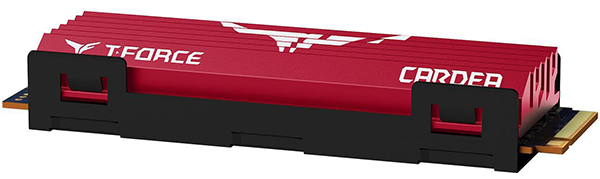
Squad Group T-Strength Cardea (240GB)
Squad Grouping T-Forcefulness Cardea (480GB)
Team Grouping released the T-Forcefulness Cardea in two capacities of 240GB and 480GB. Nosotros have the largest and fastest model in for testing.
There is a slight difference in performance between the ii capacities. Almost users will non see a deviation in four-corner performance, just they will discover a difference in mixed workloads. The T-Force Cardea 480GB sports up to ii,650/1,450 MB/due south sequential read/write speeds. Random performance comes in at 180,000/150,000 read/write IOPS, but to achieve those numbers you demand multiple threads. We examination with a single thread because that's how most software addresses storage.
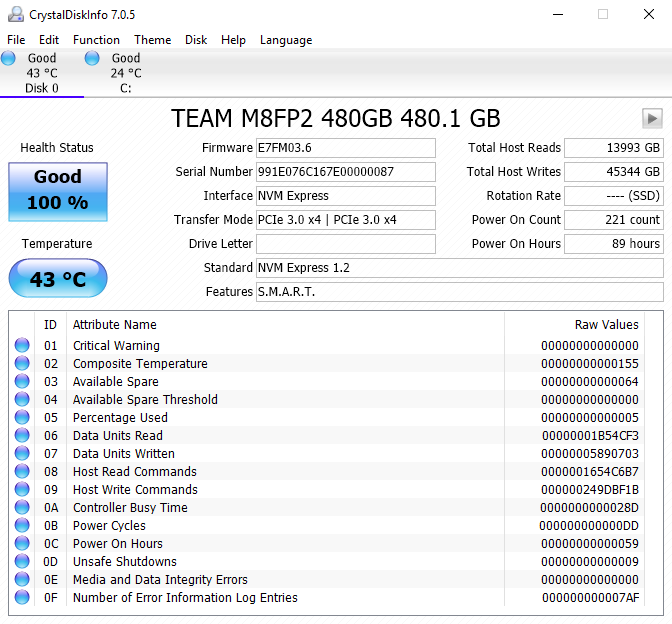
The Cardea uses a PCIe iii.0 x4 connectedness and the NVMe protocol. This is the starting time Phison E7 we've tested with the new iii.6 firmware. The "M" in the E7M03.6 leads united states of america to believe this firmware is MP or mass production, and that means it has been tested for compatibility and stability. We haven't heard anything almost this update from any of the manufacturers, so it will be interesting to meet what nosotros find during testing.
The image higher up was taken iii-quarters of our way through testing, and we'd already written 45 terabytes to the bulldoze.
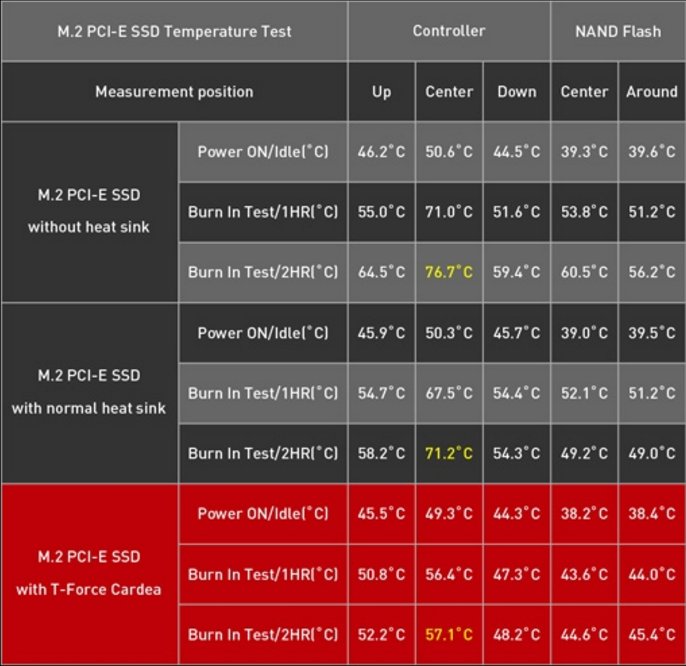
Squad Group released temperature data for the T-Force Cardea with a big heat sink. In that location are three sets of data. The first is without a heat sink. The second says a "normal heat sink," only we're non sure what that really defines. The 3rd and final gear up measures the Cardea with the large heat sink. During a ii-60 minutes burn-in exam, the heat sink kept the E7 processor nearly 20 degrees libation than without a heat sink. We don't take any information about the testing environment. The Phison PS5007-E7 employs a dynamic throttling algorithm, and the controller can reach temperatures equally loftier every bit 90C before activating an farthermost throttle that severely degrades performance.
Pricing And Accessories
Newegg already carries the Team Grouping T-Strength Cardea in both capacities. The 240GB model currently retails for $149.99. The 480GB model we have in for testing sells for $269.99. The pricing scheme moves the E7 out of the entry-level NVMe category and pits it against products similar the OCZ RD400, Plextor M8Pe(1000) (G.two with rut sink model), and Samsung 960 EVO.
Nosotros didn't discover any accessories within the package and Team Group doesn't have SSD Toolbox software.
Warranty And Endurance
Team Group backs the T-Force Cardea with a 3-yr warranty express by the amount of data you write to the drive. The 240GB model can absorb 335 TB of warrantied data writes, while the 480GB model comes with 670 TB.
Packaging
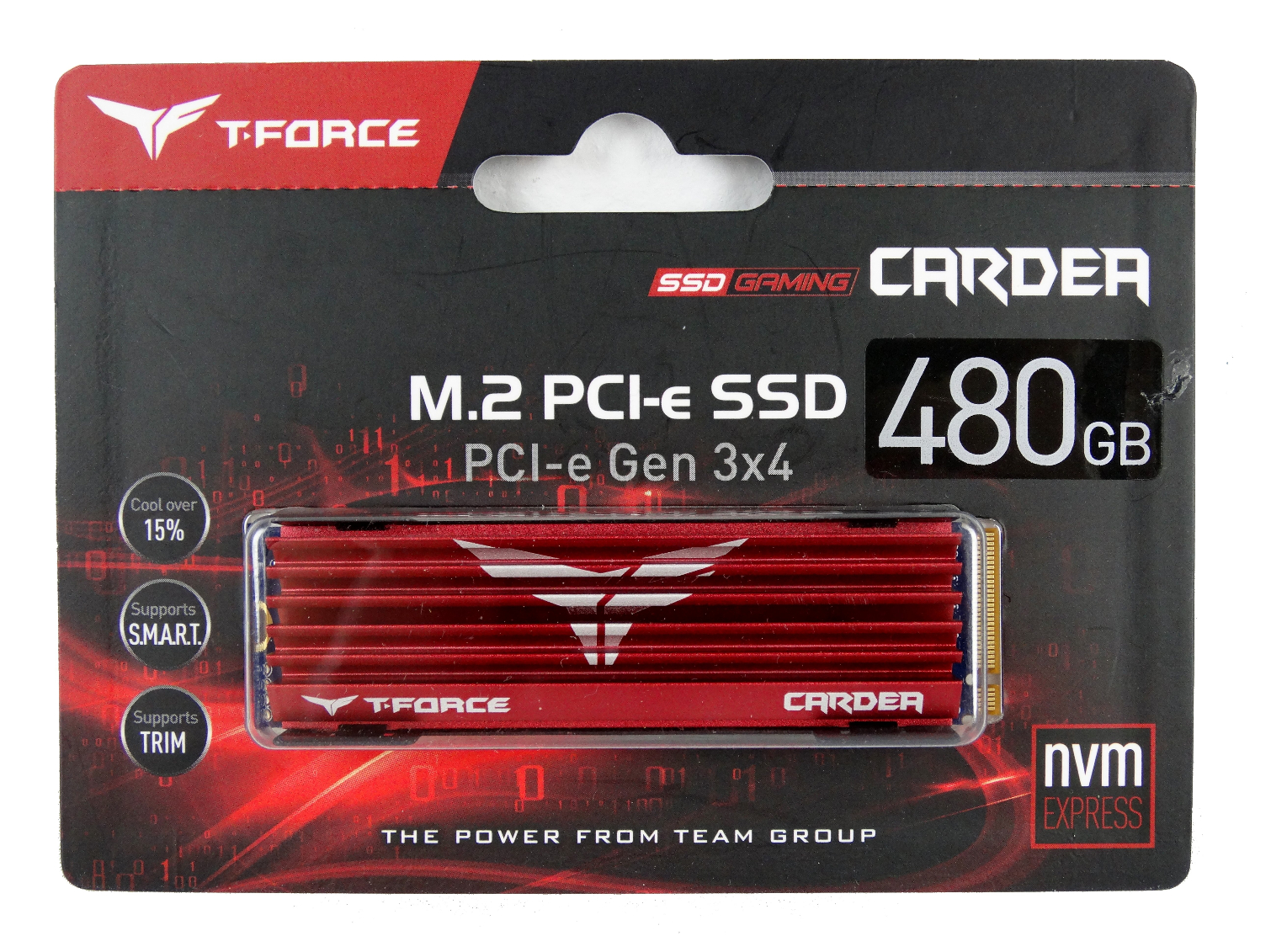
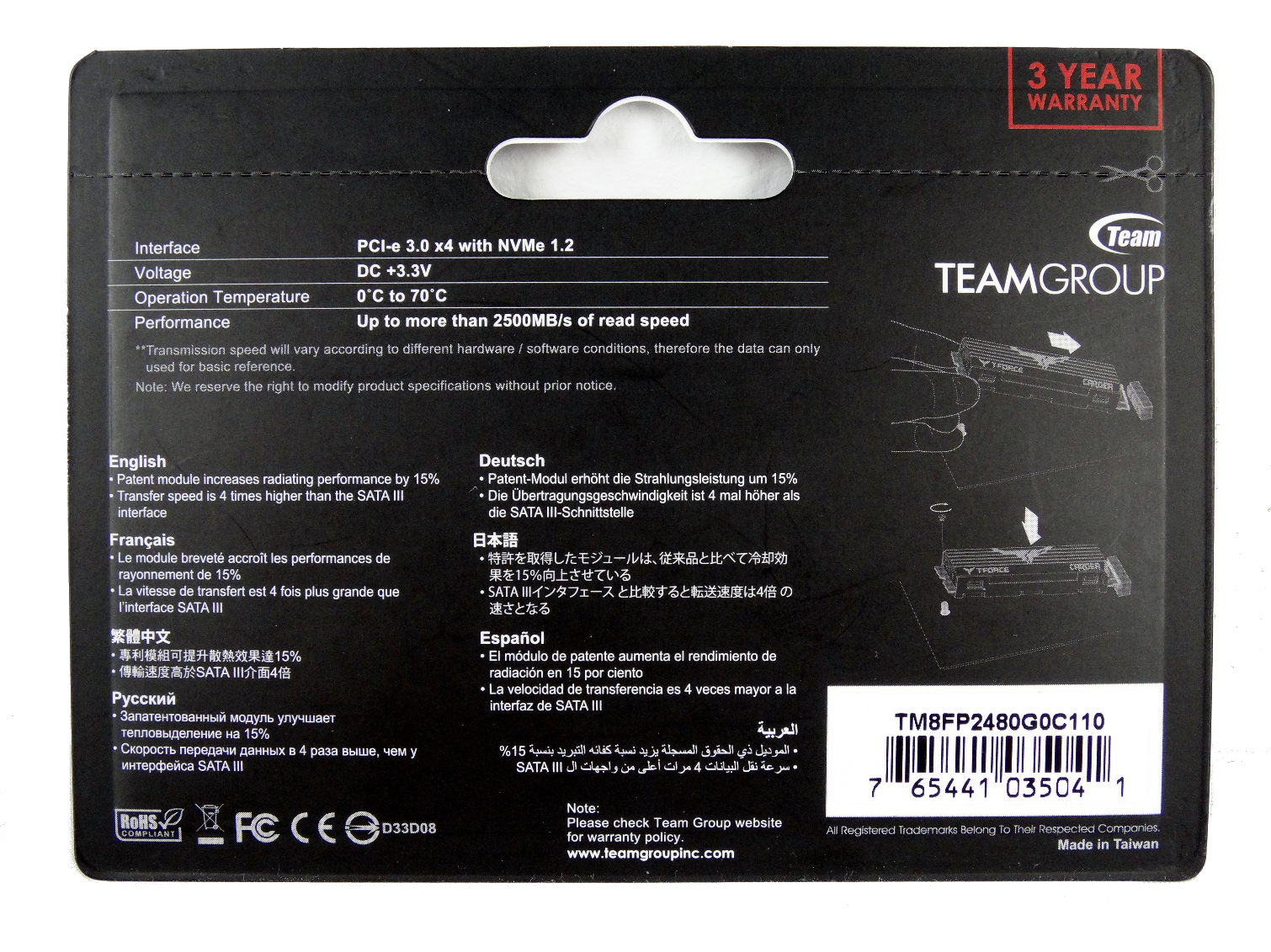
The Squad Group T-Forcefulness Cardea retail parcel is fairly direct forward. You get the drive in a retail-ready blister pack, but there is very little data available for retail shoppers. Team Grouping doesn't accept a retail presence that we are aware of, then most of these drives sell online.
A Closer Await
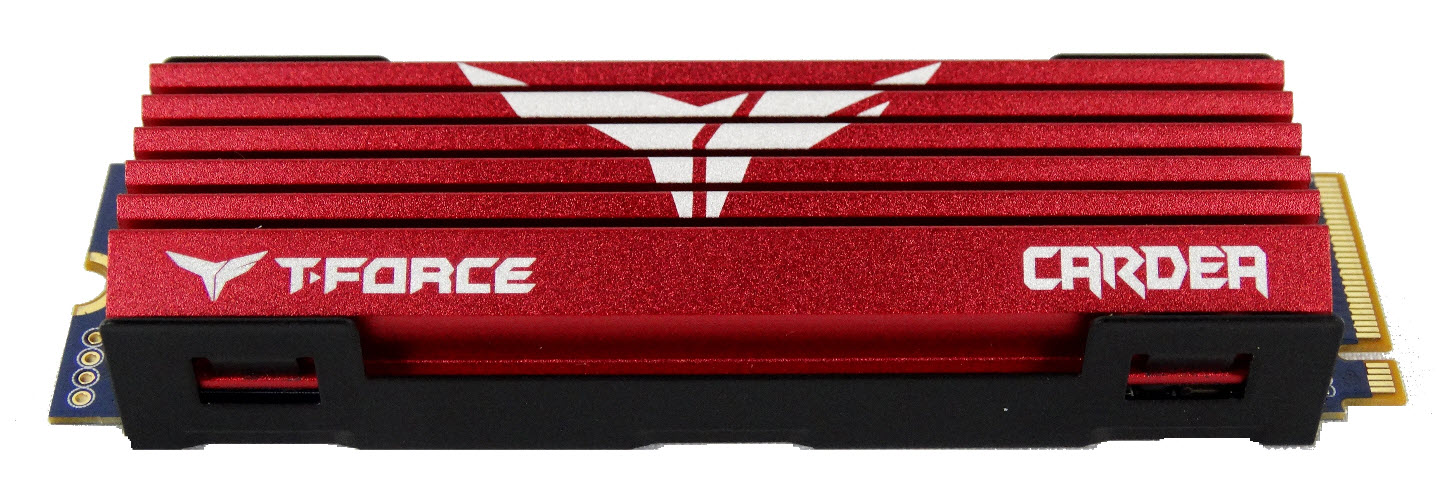
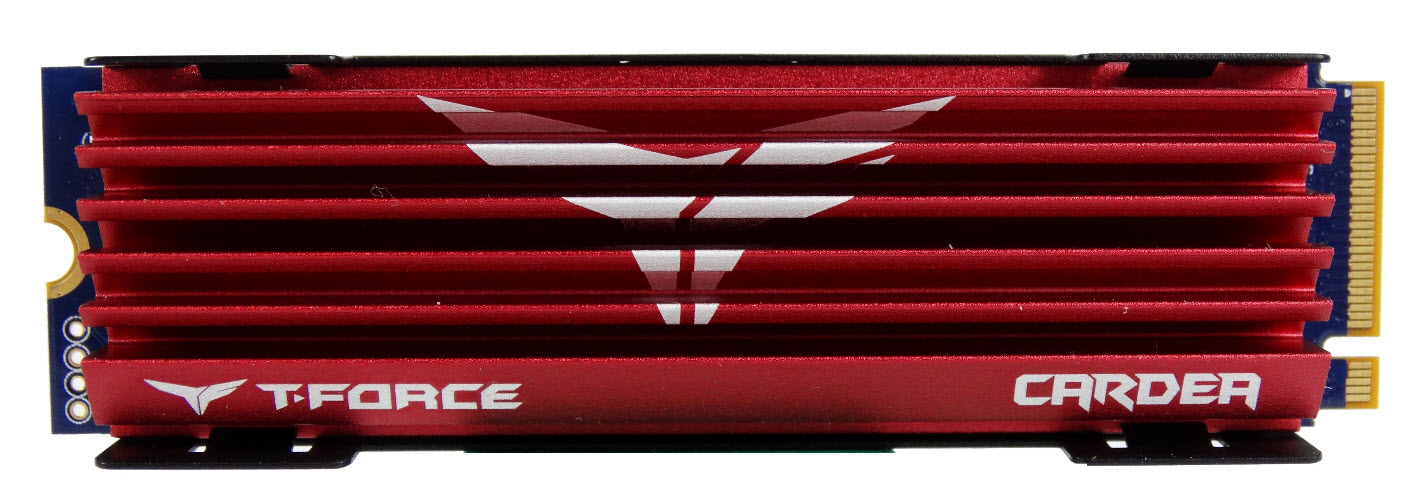
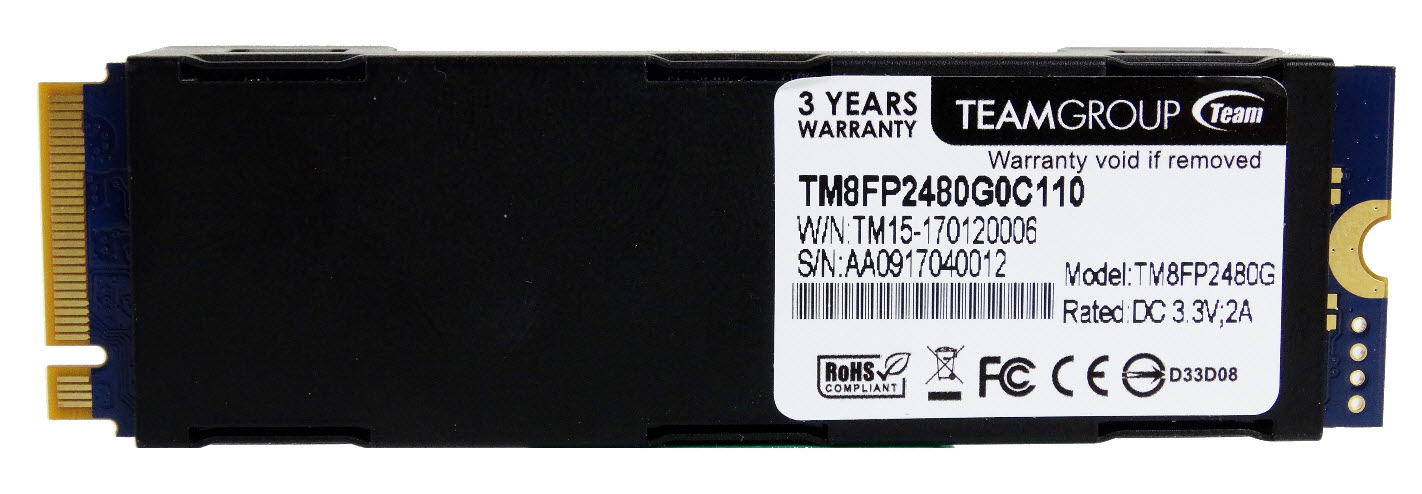
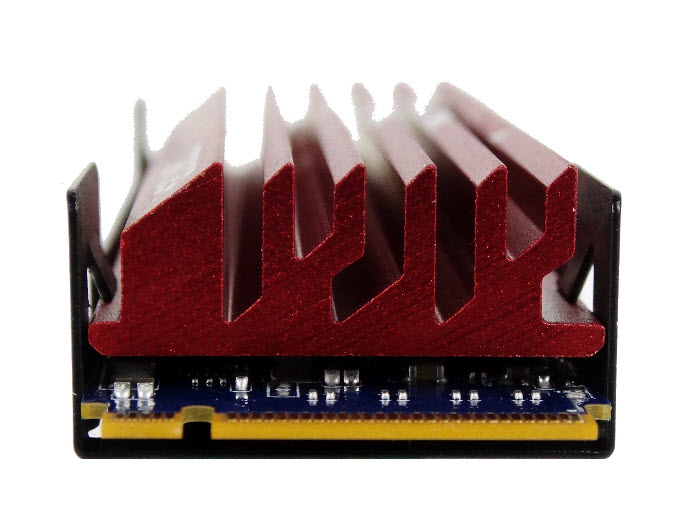
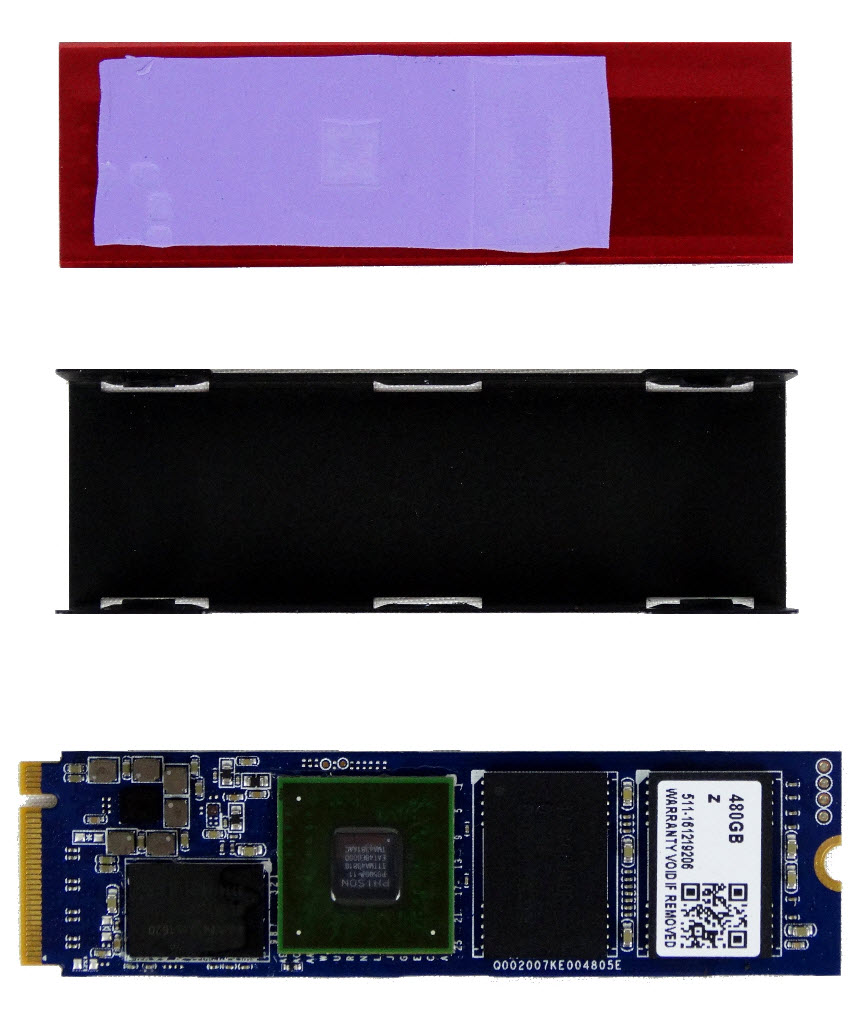
The Team Forcefulness graphic appears with the drive at an angle. You can still run across it direct on, but you lot go the total issue at an angle. The heat sink retentivity bracket doubles every bit a cooling device on the other side of the drive. This helps to spread the heat from the NAND packages.
I can't say with certainty that the T-Strength Cardea will not fit in any notebook, but information technology doesn't fit in our Lenovo P70 mobile workstation, which is the largest notebook I take with NVMe back up.
MORE: Best SSDs
More than: How We Exam HDDs And SSDs
More: All SSD Content
mcanultyaborted47.blogspot.com
Source: https://www.tomshardware.com/reviews/teamgroup-t-force-cardea-ssd-review,4990.html
0 Response to "Team Group T-force Cardea M2 2280 480gb Review"
Post a Comment